Follow Us on Social Media!
You can quickly access up-to-date information about our engineering solutions, product innovations and corporate announcements by following our social media accounts.
You can reach our technical posts on LinkedIn,
watch our detailed content on our YouTube channel,
closely follow our projects on Instagram and
review our corporate updates on our Facebook page.
We invite you to follow our profiles to stay up to date and be informed about all developments.
FBR Industrial Gas Burner – Introduction and Basic Definitions
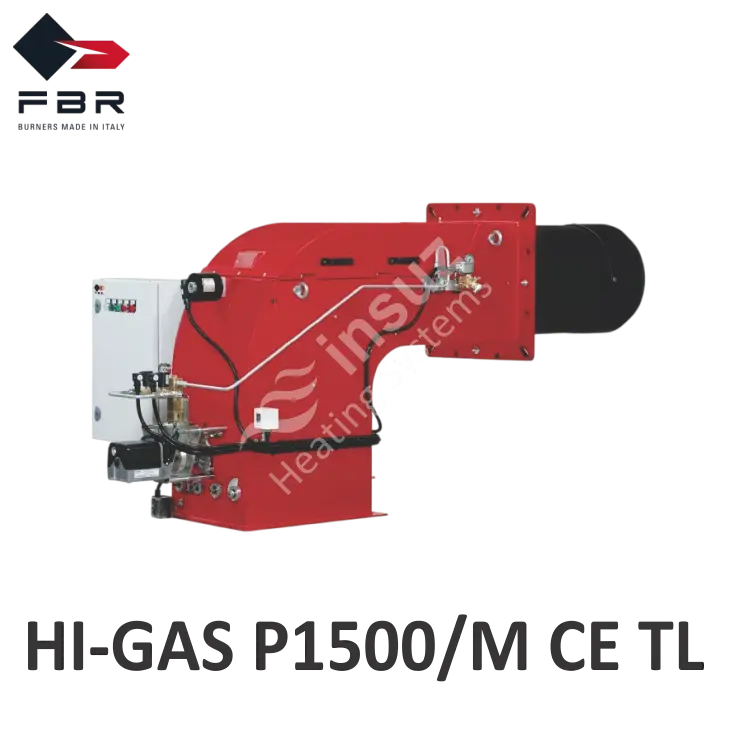
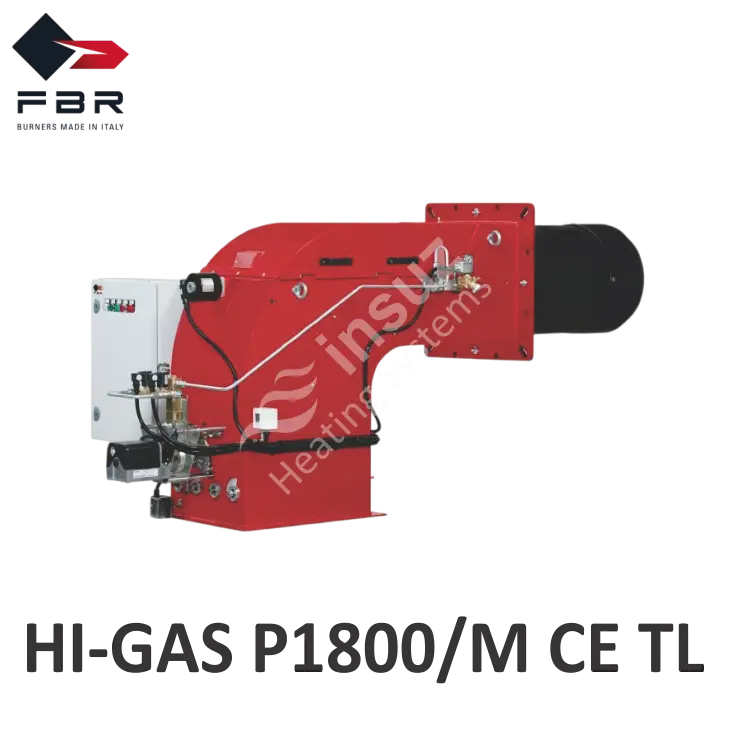
An FBR Industrial Gas Burner is a critical combustion device that provides controlled combustion by optimizing the fuel–air mixture in industrial processes where high efficiency is required. These burners are engineering products specifically developed to reduce energy consumption, ensure precise combustion control and minimize emission values, especially in heavy industrial applications. In industrial production lines, the FBR Industrial Gas Burner delivers reliable, durable and technically stable performance in boiler systems, heating equipment, drying processes and thermal applications.
Modern FBR Industrial Gas Burner designs are equipped with electronic control cards, modulation technologies, advanced ignition systems and automation-supported safety components, allowing adaptation to a wide variety of operating conditions. Rising energy costs in industrial plants make it essential for burners to operate with higher efficiency, lower NOx/CO emissions and improved combustion quality.
FBR Industrial Gas Burner , Operating Principle
The operating principle of an FBR Industrial Gas Burner is based on supplying fuel in a controlled way, mixing it with air and burning it under optimum conditions in the combustion chamber. The steps below summarize this process:
- Fuel Supply: Gaseous fuels such as natural gas or LPG are safely delivered to the burner via pressure regulators and solenoid valves.
- Air Supply: The required combustion air is supplied by a fan or compressor.
- Mixture Ratio Control: Fuel and air are combined in the correct ratio in the mixing chamber located in the burner body.
- Ignition: Electronic ignition systems generate a spark to initiate combustion.
- Modulation: The burner operates with low–high stages or proportional modulation according to process demand, optimizing energy consumption.
- Safety Control: Flame sensors, air pressure switches and combustion control units continuously verify safe operation.
FBR Industrial Gas Burner Technical Components
The FBR Industrial Gas Burner has a complex engineering infrastructure and consists of numerous technical components:
- Fan Motor: High static pressure fan motors ensure correct air flow.
- Solenoid and Gas Valves: Control fuel flow quickly and safely.
- Electronic Combustion Control Unit: Manages flame monitoring, ignition and modulation automatically.
- Burner Body: Manufactured from high-temperature resistant materials and aerodynamically designed to minimize turbulence.
- Flame Sensors: UV or IR-based sensors monitor combustion stability.
- Air Damper: Adjusts combustion air flow to maintain the correct mixture ratio.
FBR Industrial Gas Burner , Advantages
The main reasons why these burners are preferred in industrial plants are linked to the following technical advantages:
- Environmentally friendly operation with low NOx and CO emission values.
- Energy savings and stable temperature control thanks to modulating operation.
- Low fuel consumption with high combustion efficiency.
- Durable and serviceable design suitable for intensive operating conditions.
- Full compatibility with industrial automation systems.
- Wide power range, enabling use with different boiler types and processes.
FBR Industrial Gas Burner
Although they are efficient and advanced systems, there are certain challenges from an engineering perspective:
- If combustion settings are not properly adjusted, efficiency loss may occur.
- Maintenance costs can increase in high-capacity burners.
- Incorrect gas pressure configuration can negatively affect system operation.
- Contamination and nozzle clogging may occur, especially with low-quality gas.
FBR Industrial Gas Burner, Integration with Industrial Systems
The FBR Industrial Gas Burner is extensively integrated especially with boiler systems. At this point, compatibility with various boiler types is important. For example:
- With hot water boiler systems, it provides high-efficiency heat transfer.
- In high-temperature water boiler applications, it plays a key role in high-pressure, high-temperature control.
- On steam boiler lines, it ensures stable and controlled combustion for reliable process steam production.
Heat exchangers are also frequently integrated in heating systems. Especially plate heat exchanger and shell and tube heat exchanger configurations help transfer the heat produced by the burner efficiently to the processes.
FBR Industrial Gas Burner , Fields of Application
The FBR Industrial Gas Burner is an integral component of energy generation and heating processes across many industrial sectors. Below are sector-based examples of use.
FBR Industrial Gas Burner , Automotive Industry
In the automotive industry, stable heat is required in paint curing ovens, surface treatment lines, heat treatment furnaces and parts cleaning systems. The FBR Industrial Gas Burner ensures homogeneous heat distribution and energy optimization in these processes.
FBR Industrial Gas Burner , Energy Sector
In power generation facilities, steam production, hot water supply and backup heating systems are of critical importance. FBR Industrial Gas Burner solutions deliver high operational efficiency in thermal plants, cogeneration facilities and boiler rooms.
FBR Industrial Gas Burner , Construction
They are used to provide continuous and reliable thermal energy in applications such as concrete drying, material heating, construction chemicals processes and floor covering works.
FBR Industrial Gas Burner , Food Industry
Ovens, steam rooms, cooking lines, sterilization systems and drying tunnels can be heated with FBR Industrial Gas Burner systems. This ensures a controlled production environment with high hygiene standards.
FBR Industrial Gas Burner , Chemical and Petrochemical Sector
High temperature stability is ensured in catalytic reactions, distillation columns, reactor heating lines and solvent recovery systems. Since combustion safety is critical in chemical processes, FBR models are widely preferred in this field.
FBR Industrial Gas Burner ,Textile Industry
Stable heat demand in dyeing machines, drying drums, steam ironing systems and finishing processes is met by FBR Industrial Gas Burner systems.
FBR Industrial Gas Burner , Metallurgy Sector
High-capacity models are used for hardening, tempering, annealing and melting processes. Flame characteristics are of great importance in metallurgical operations.
FBR Industrial Gas Burner , Selection Criteria
From an engineering perspective, correct burner selection is one of the main factors determining system efficiency. When selecting an FBR Industrial Gas Burner, the following parameters should be considered:
- Thermal power requirement (kW or kcal/h).
- Combustion chamber geometry and boiler type.
- Fuel type to be used and supply pressure.
- Emission values and compliance with environmental regulations.
- Integration requirements with automation systems.
- Modulation range and operating frequency.
- Ease of maintenance and service support.
FBR Industrial Gas Burner , Maintenance and Operational Requirements
For efficient operation, an FBR Industrial Gas Burner requires technical maintenance at defined intervals. Recommended maintenance steps in engineering practice include:
- Cleaning burner nozzles and clearing any blockages in the gas channel.
- Testing flame detectors.
- Checking fan motor bearings.
- Function tests of gas shut-off valves.
- Adjusting the ignition electrode gap.
- Optimizing combustion settings with an analyzer.
These maintenance activities reduce energy consumption and extend burner service life.
FBR Industrial Gas Burner ,Safety Standards
Since burners operate with high temperature and flammable gas, they are designed in accordance with international safety standards. Standards such as EN 676 and EN 746-2 define the safety requirements for an FBR Industrial Gas Burner. In addition, the following safety equipment is mandatorily included in the control panels:
- Flame monitoring systems.
- Phase failure and motor protection relays.
- High-pressure and low-pressure switches.
- Emergency stop buttons.
- Gas leakage test systems.
FBR Industrial Gas Burner , Comparison with Other Burners
Compared with industrial burner types used worldwide, the FBR Industrial Gas Burner offers the following advantages:
- Wide modulation range.
- Low-emission combustion technologies.
- High compatibility with automation systems.
- Modular spare parts structure.
- High flame stability.
Although alternative combustion systems such as the pulverized coal burner are used in some special applications, gas burners are more widely preferred due to their lower environmental impact and higher controllability.
FBR Industrial Gas Burner
The FBR Industrial Gas Burner is a critical piece of equipment in modern industrial processes for increasing energy efficiency, reducing emission values and achieving sustainable production standards. Advanced control, high performance, long service life and wide fields of application make these burners indispensable for industrial plants. Proper engineering analysis, correct burner selection, regular maintenance and compliance with safety standards are the essential conditions for using the FBR Industrial Gas Burner at maximum efficiency. Therefore, industrial facilities that adopt high-efficiency solutions such as the FBR Industrial Gas Burner in their energy management strategies make a significant contribution to their sustainable production targets.


 Русский
 Türkçe